When a loved one passes, the last thing a Muslim family should face is a logistical maze. Here's why sacred space matters more than most realize.
When a Muslim passes away in New York, the clock starts immediately. Islamic law calls for burial as soon as possible, ideally within 24 hours. For families in Queens, Brooklyn, the Bronx, Manhattan, or Long Island, that means coordinating between a hospital, a funeral home, a mosque, and a cemetery, often across multiple boroughs, while grieving.
Most families don’t realize how fragmented that process is until they’re already in the middle of it. This post is for anyone who wants to understand why the location of the Janazah prayer matters, what Islamic tradition calls for, and why an on-site Masjid changes the entire experience.
Salat al-Janazah is the congregational funeral prayer performed for every Muslim who has passed. It is not optional. In Islamic jurisprudence, it is classified as Fard Kifayah, a communal obligation, meaning the entire Muslim community bears responsibility for ensuring it is performed. If no one prays it, everyone is considered sinful. That’s how seriously Islam treats this moment.
The prayer itself is relatively brief, consisting of four Takbirs and specific supplications for the deceased and for all Muslims. But the weight behind it is significant. The Prophet Muhammad (peace be upon him) said that when Muslims line up in three rows to pray Janazah for the deceased, that person is forgiven. That hadith alone is a reason to want a large, properly arranged congregation, alongside a proper space to hold it.
Here’s the reality most families across Long Island, Queens, Brooklyn, the Bronx, and Manhattan face. When a loved one passes, the standard process involves calling a funeral home to handle the ghusl and kafan, then reaching out to a local mosque to arrange the Janazah prayer, then coordinating transportation to a cemetery. For most families in these areas, this means a drive out to Long Island or across to New Jersey, since New York City has no Muslim-only cemetery.
That’s at least three separate entities, three separate schedules, and multiple transports of the deceased’s body. Every handoff is a potential delay. Every delay pushes against the 24-hour window that Islamic tradition calls for.
The prayer space itself is often whatever is available: a side room at a funeral home, a parking lot, or a mosque that squeezes the Janazah between its regular prayer schedule. These are not purpose-built spaces for worship. They are borrowed spaces, and the difference is felt by the family, by the congregation, and in the quality of the experience.
When the prayer space is too small, too informal, or lacks proper wudu facilities and gender-separated areas, attendance drops. Community members who want to fulfill their own obligation, their own Fard Kifayah, cannot participate. The congregation shrinks. And with it, so does the spiritual benefit the deceased receives from the prayers of the community.
This is not a criticism of any particular mosque or funeral provider. It is simply the result of a fragmented system that was never designed with the full Janazah process in mind. Mosques are built for the living community. Funeral homes are built for preparation. Neither was designed to serve as the center of an integrated Islamic end-of-life process, and it shows.
Islam’s guidance on burial timing is clear: hasten the burial. Scholars across madhabs agree that delaying without necessity is discouraged, and that the community should move quickly to honor the deceased. For families across Long Island, Queens, Brooklyn, the Bronx, and Manhattan, that guidance runs directly into a logistical wall.
Consider what a family in the Bronx faces when a parent passes away. The body may be at a hospital in one part of the borough. The funeral home that handles ghusl and kafan may be in Brooklyn. The mosque willing to host a Janazah on short notice may be in Queens. And the nearest Muslim burial section, Washington Memorial Park in Mt. Sinai, Long Island, is over an hour away under good traffic conditions. The Long Island Expressway does not care about the 24-hour obligation.
Every extra stop adds time. Every phone call to coordinate between providers adds time. Every moment spent waiting for a mosque to open its schedule adds time. Families who have been through this process describe it as one of the most stressful experiences of their lives, not because death is easy, but because the system makes it harder than it needs to be.
The emotional cost is real too. Moving a loved one’s body multiple times, from facility to facility, raises genuine concerns about dignity. It introduces doubt about whether everything is being handled with the care and reverence that Islamic law requires. Families shouldn’t have to wonder whether the ghusl was done properly, whether the person transporting the body understands what they are carrying, or whether there will be a qualified Imam available when the body finally arrives at the mosque.
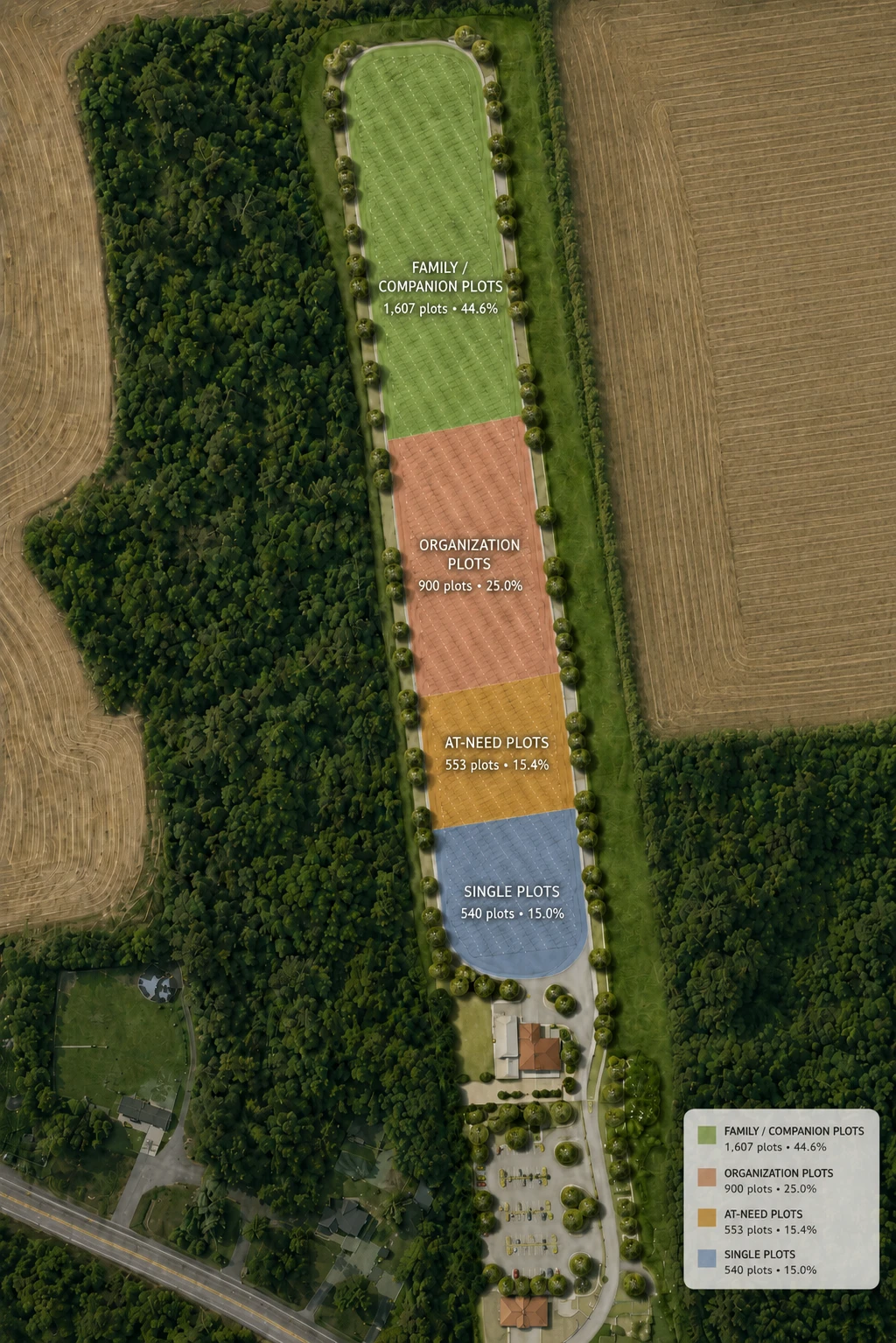
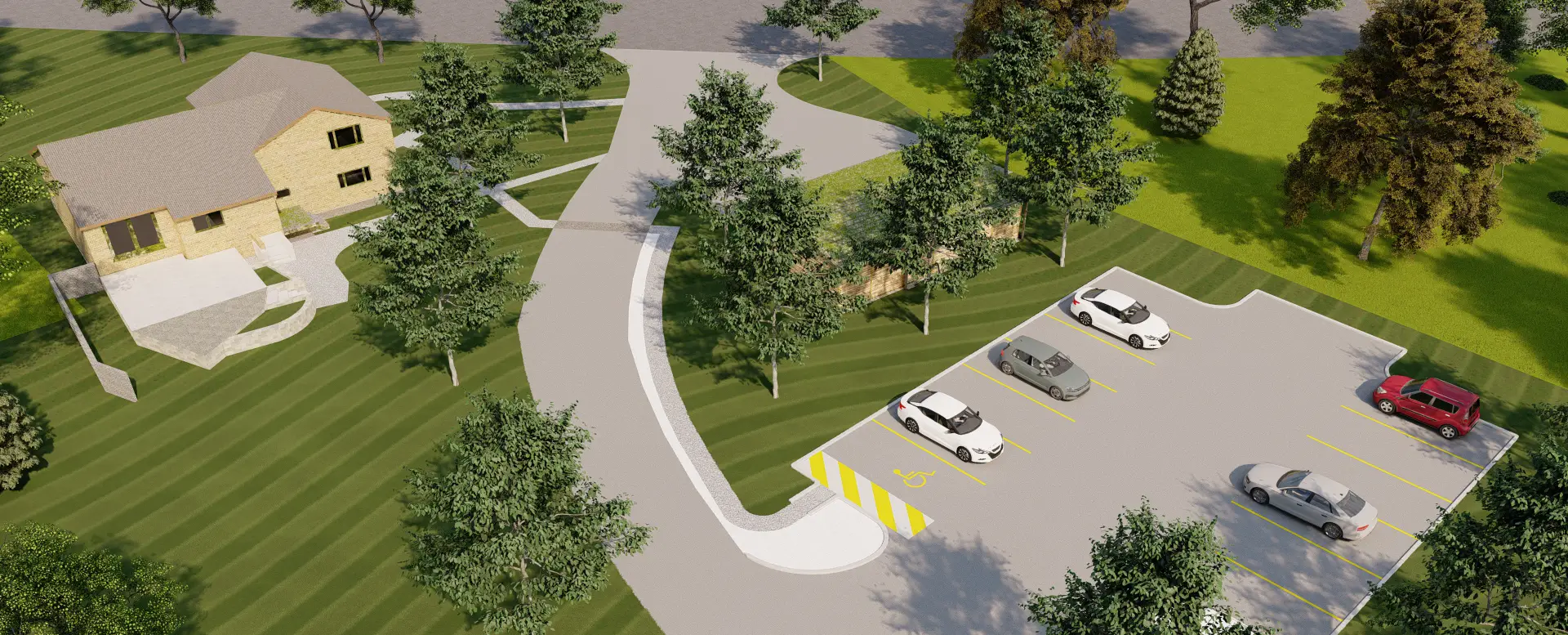
An on-site Masjid at a dedicated Islamic memorial grounds facility doesn’t just reduce the number of stops. It removes the uncertainty entirely. The ghusl, the kafan, the Janazah prayer, and the path to burial can all happen within one integrated process, the way it was always meant to be handled.
Want live answers?
Connect with a Akhirah expert for fast, friendly support.
Most Muslim families in Queens, Brooklyn, the Bronx, and Manhattan don’t find out until it’s too late that New York City has no Muslim-only cemetery. There is no Islamic cemetery within the five boroughs. The primary option for Muslim burial in the New York area has been Washington Memorial Park in Mt. Sinai, Long Island, which has a dedicated Muslim section, but a finite number of remaining plots.
The Long Island Muslim Alliance, a nonprofit organization, has been working to establish the first dedicated Muslim cemetery on Long Island precisely because the community’s need for Islamic burial infrastructure has outpaced what currently exists. That effort is a sign of how serious the gap is. For families navigating this right now, the shortage is not an abstract policy issue; it is a real and immediate problem.

The most important thing a Muslim family can look for is genuine Islamic competence: not just willingness to accommodate Muslim clients, but deep, working knowledge of what Islamic law calls for at every step.
That means a facility where the ghusl is performed by someone trained in the Islamic method, with gender-appropriate arrangements: women washing women, men washing men. It means a kafan prepared according to Sunnah. It means a qualified Imam available to lead the Janazah prayer, not someone who was asked at the last minute. It means a burial oriented toward the Qibla, without embalming, without unnecessary casket upgrades, and without pressure to add services that have no basis in Islamic practice.
It also means availability. Death does not follow business hours. A family that loses a loved one at 2 a.m. on a Tuesday needs to reach someone who answers, who knows what to do, and who can begin the process immediately. Delays in the first hours after death are the most likely cause of missing the 24-hour window, and they almost always happen because no one is available to coordinate.
For families in Brooklyn, Queens, the Bronx, or Long Island, proximity to burial grounds is a practical factor that cannot be ignored. The longer the distance between the facility where the Janazah prayer is held and the cemetery where burial takes place, the more complicated the logistics become. An Islamic funeral and burial facility that keeps these components close together, or, better, integrates them, removes the most common sources of delay and distress.
There is a meaningful difference between a funeral home that offers Islamic services and an Islamic institution that was built around the needs of the Muslim community from the ground up. The presence of an on-site Masjid is one of the clearest ways to tell the difference. A dedicated Masjid at a memorial facility signals something specific: that the people who built this place understood that the Janazah prayer is not a logistical checkbox. It is an act of worship. It deserves a space that was designed for worship, with proper wudu facilities, adequate room for a full congregation, gender-separated prayer areas, and an Imam who is present and prepared.
For families across Long Island, Queens, Brooklyn, the Bronx, and Manhattan, the Muslim community is large, diverse, and growing. A 2023 survey found that Queens is approximately 6% Muslim and Brooklyn approximately 4% Muslim. The Bronx has a substantial and expanding Muslim population, with new mosque infrastructure under active development. Manhattan’s Muslim community spans East Harlem, Harlem, Washington Heights, and beyond. Long Island’s Muslim families are spread across Nassau and Suffolk Counties, many of them far from the Islamic centers closer to the city.
All of these families share the same need: a place where the full Janazah process can happen with dignity, religious correctness, and without the chaos of coordinating between multiple providers who don’t know each other and weren’t built to work together.
At Akhirah House of Worship, our name reflects our mission. “Akhirah” is the Islamic word for the Hereafter, the state that comes after this life. It is not a borrowed name or a marketing choice. It is a statement of purpose. Everything we do is oriented toward that understanding: that how we care for the deceased is an act of worship, and that the family left behind deserves to experience that care without obstacle.
No matter if you are reading this before a loss has occurred, that is the best possible time to understand your options. Knowing where to turn, and why the location and structure of a facility matters, means your family won’t be making those decisions under the worst possible circumstances.
No matter if you are reading this in the middle of a loss, know that the process does not have to be as complicated as the New York system often makes it. An on-site Masjid, a qualified Imam, proper ghusl facilities, and access to dedicated Islamic burial grounds in one place is not an impossible standard. It is what the Janazah process deserves.
Akhirah House of Worship exists to serve Muslim families across Long Island, Queens, Brooklyn, the Bronx, and Manhattan who need every step handled with Islamic correctness, genuine care, and the kind of integration that makes a painful time as peaceful as it can be. Reach out to us directly; we are here to answer your questions, walk you through the process, and make sure your family is never left navigating this alone.
Summary: