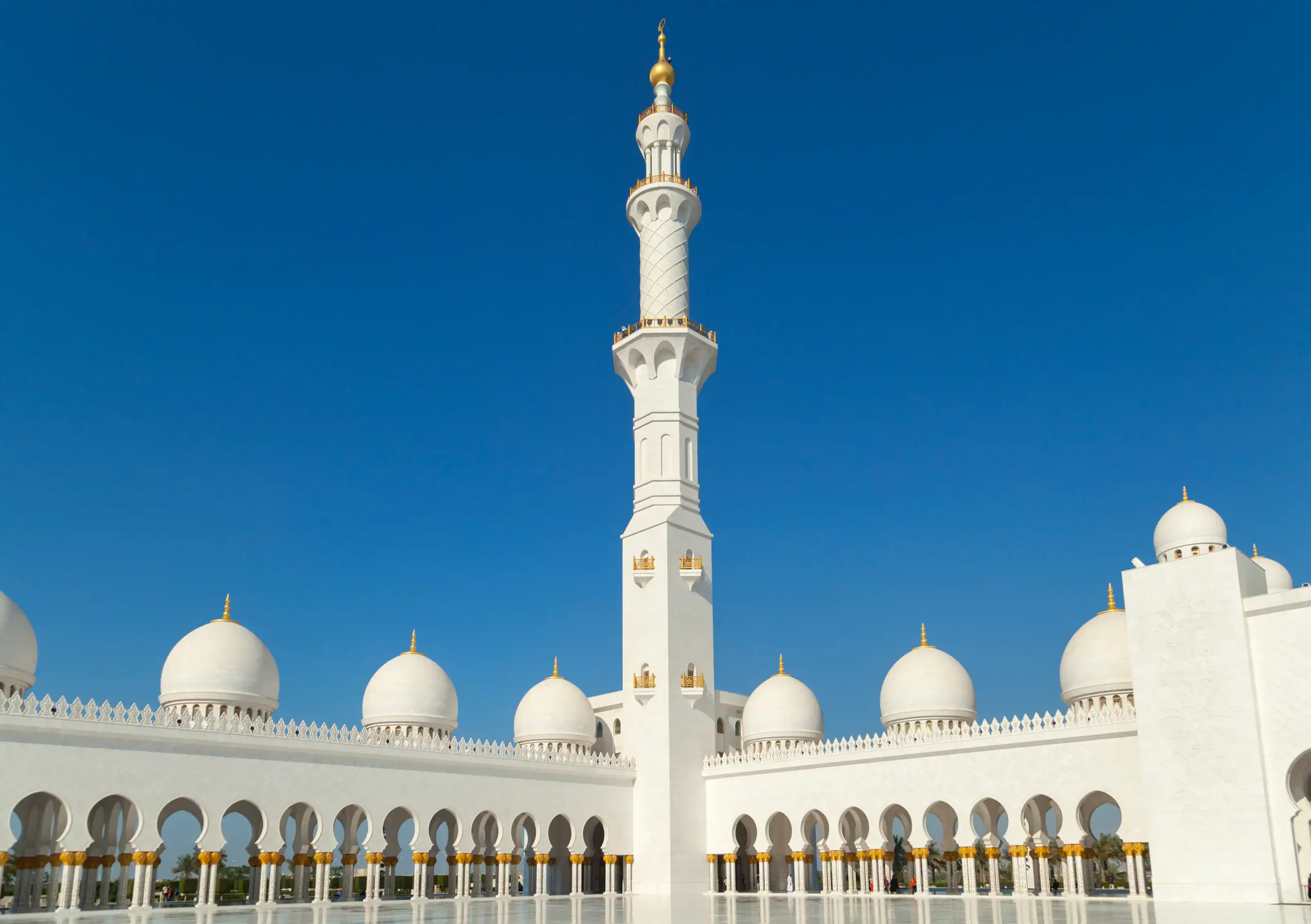
Five daily prayers. One community. The benefits of attending the masjid go deeper than most people realize, spiritually and scientifically.
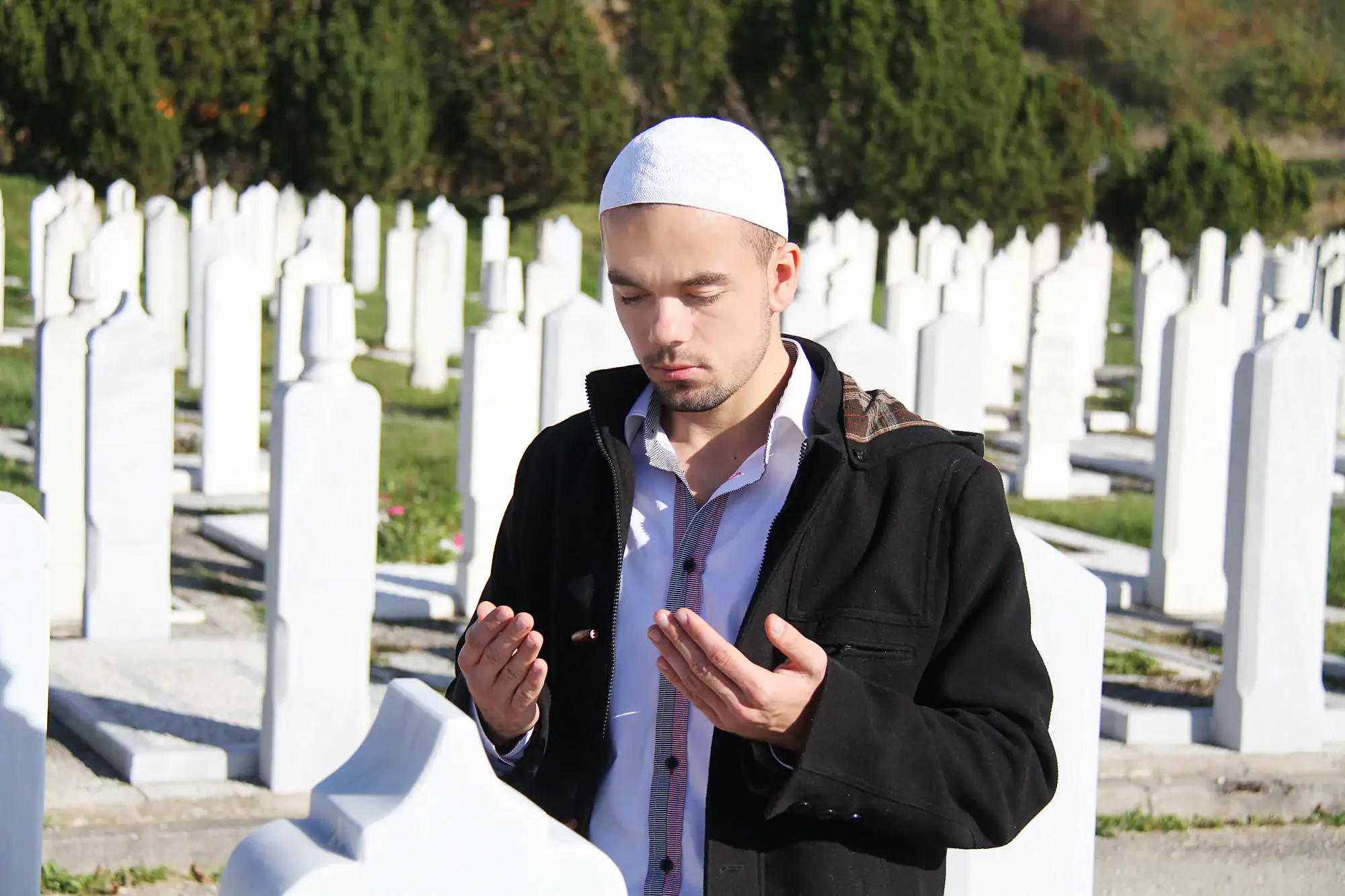
Life in New York moves fast. No matter if you’re commuting out of Bay Shore on the LIRR, navigating Jamaica Avenue in Queens, or squeezing onto the 2 train in the Bronx, the city has a way of consuming your time before you’ve had a chance to think. For a lot of Muslims across Long Island, Queens, Brooklyn, the Bronx, and Manhattan, daily prayers still happen, but they happen at home, alone, squeezed between obligations. It works. But you might be leaving more on the table than you realize.
The masjid offers something that a prayer rug in your bedroom simply cannot replicate, and the evidence for that goes well beyond hadith.
Studies, peer-reviewed, published research, show that congregational prayer produces measurably better mental health outcomes than other forms of social activity. Not just better than sitting alone at home, but better than most group social interactions in general.
Research shows that regular prayer reduces anxiety and depression, lowers blood pressure, and can even boost the release of serotonin and dopamine, the same neurochemicals that regulate mood and motivation. The physical act of Salah, the structured rhythm of it, the grounding of your forehead to the floor, functions as a form of meditation that the body and mind respond to in measurable ways.
When that prayer happens in congregation, surrounded by others who are doing the same thing, the effect compounds.
Most practicing Muslims know the hadith, that the reward for congregational prayer is twenty-seven times greater than praying alone. For a Muslim who prays five times a day, every trip to the masjid is spiritually significant in a way that no amount of home prayer can match.
From a psychological standpoint, the community formed through congregational prayer creates a sense of belonging and social support that researchers identify as one of the most powerful protective factors against depression and isolation. New York City, for all its energy, is one of the loneliest cities in the world for people who don’t have a strong community around them.
The Muslim population across Queens, Brooklyn, the Bronx, Manhattan, and Long Island is large and diverse, but that doesn’t automatically mean every Muslim feels connected. Many don’t. The masjid changes that.
The fixed times of the five daily prayers (Fajr, Dhuhr, Asr, Maghrib, Isha) create a rhythm. They give your day structure. They put you in the same room as your neighbors, your brothers and sisters in faith, on a schedule that doesn’t bend to convenience. That consistency is part of what makes the mental health benefit real. It’s not a one-time uplift; it’s a daily reset.
For young Muslims especially, research shows that socializing in the masjid is associated with increased self-esteem and a stronger sense of identity. In a city where Muslim youth are navigating enormous pressure, academic, cultural, social, that anchor matters more than most parents realize. The masjid isn’t just a place to pray. It’s a place to belong.
And belonging, as it turns out, is one of the things the human mind needs most.
There’s a Prophetic tradition that says every step you take walking to the masjid is recorded as a good deed and wipes out a sin. For Muslims in Long Island, Queens, Brooklyn, the Bronx, and Manhattan, that’s not a metaphor, it’s a literal daily reality. You’re walking to the subway in Flatbush. You’re driving down the Long Island Expressway before Fajr. You’re crossing a few blocks in the Bronx in the cold. Each of those steps counts.
That framing matters because it reorients how you think about the effort. The commute isn’t the cost of attending the masjid, it’s part of the worship itself. The inconvenience is the point, in a sense. It signals intention. It signals that you’re choosing Allah over comfort, and that choice is recognized.
This is also where the spiritual and mental benefits start to overlap. When you approach the masjid not as an obligation to check off but as an act with inherent value in every step, the entire experience shifts. You arrive differently. You pray differently. You leave differently.
The masajid are described in authenticated hadith as the most beloved places on earth to Allah. That shapes how a Muslim should think about the time spent there, not as time taken away from the rest of life, but as the most valuable time in the day. For New York Muslims who feel like the city is constantly pulling them in every direction, that reframing is genuinely useful. The masjid is not one more thing on your list. It is the thing that makes the rest of the list bearable.
There’s also the matter of accountability. Praying at home is easy to shorten, to rush, to skip when you’re tired. Praying in congregation, with an imam setting the pace and a row of people beside you, is different. The quality of your prayer improves. The presence of others calls you to be more present yourself.
Want live answers?
Connect with a Akhirah expert for fast, friendly support.
The name Akhirah means the Hereafter. We chose that name deliberately, because we believe the masjid’s role doesn’t begin and end with daily prayer. It spans a Muslim’s entire life, from the community that surrounds a newborn, to the education that shapes a child, to the Janazah that honors a soul at the end.
In Long Island, Queens, Brooklyn, the Bronx, and Manhattan, where the Muslim community stretches across neighborhoods and boroughs, that full-service role matters. Families need more than a place to pray. They need an institution they can trust across every significant moment, including the ones that come without warning.
This is a question most families don’t ask until they have to. And when they have to, they’re already in grief, already overwhelmed, already trying to navigate a process they’ve never dealt with before, often in a state, and sometimes in a country, that isn’t where they grew up.
Islamic funeral rites are a fard kifaya, a collective obligation on the Muslim community. If a deceased Muslim is not properly buried according to Islamic law, the entire community bears responsibility. That means the stakes of getting this right are high, and the responsibility of finding the right institution is real.
The four required stages, ghusl (ritual washing), kafan (shrouding), Salat al-Janazah (the funeral prayer), and dafan (burial), must be performed by people who understand Islamic law, not just people who are willing to try. Ghusl, for example, must be performed by same-gender individuals. That requires trained, faith-grounded staff, not a secular funeral home that added Islamic services to a menu.
Islamic law also calls for burial as soon as possible after death, typically within twenty-four hours. In New York, that means navigating state burial permits, coordinating with a cemetery, and ensuring every step is handled correctly, quickly, and with the dignity the deceased deserves. Families who haven’t pre-planned, and who don’t have a trusted masjid or Islamic institution to call, often find themselves scrambling.
Long Island presents its own specific challenge. There is currently no fully standalone Muslim cemetery on Long Island. Muslim burials there rely on designated sections within secular cemeteries, and those sections are finite. Washington Memorial Park in Mt. Sinai, for example, had approximately 3,997 Muslim graves remaining at last count. Once that section fills, it closes. The scarcity is real, and it’s getting more urgent with every passing year.
This is part of why we exist as both a house of worship and a memorial institution. The two are not separate services. They are part of the same commitment to the Muslim community.
There’s a concept in Islamic tradition called dhikr al-mawt, the remembrance of death. It’s not morbid. It’s clarifying. The Prophet ﷺ encouraged Muslims to remember death often, not to induce fear, but to put this life in proper perspective. Every prayer is, in a quiet way, a practice in that remembrance. You face the Qibla. You bow. You prostrate. You acknowledge that you are not in control of what comes next.
The masjid is where that remembrance lives most naturally. And it’s also why the institution you trust for your daily prayers should be the institution you trust when a family member passes, or when you’re thinking ahead about your own arrangements.
Pre-planning an Islamic burial is not pessimism. It is an act of tawakkul, trust in Allah, and an act of mercy toward the people you love. Families who have pre-planned describe an enormous reduction in stress during an already devastating time. They knew who to call. They knew the process would be handled correctly. They didn’t have to make impossible decisions while in shock.
For Muslims in Queens, Brooklyn, the Bronx, Manhattan, and across Long Island, finding an institution that handles both the spiritual life of the community and the final rites of its members is rare. Most masjids refer families out to separate funeral homes. Most funeral homes that offer Islamic services are not connected to an active, practicing Muslim community. The gap between those two things is where families get lost.
At Akhirah House of Worship, we don’t think of worship and memorial grounds as separate departments. The name we carry, Akhirah, is a reminder that every prayer, every step to the masjid, every moment of community built in congregation, is preparation for what comes after. That’s not a tagline. It’s the reason we exist.
The mental and spiritual benefits of attending the masjid for daily prayers are real, documented, and available to every Muslim willing to make the walk. The community, the structure, the reward, none of it requires anything other than showing up. And in a city as relentless as New York, showing up to the masjid might be the single most restorative thing you do each day.
But the masjid’s role doesn’t stop at prayer. For Muslim families across Long Island, Queens, Brooklyn, the Bronx, and Manhattan, it extends to the moments that matter most, including the hardest ones.
If you’re looking for a place that takes both seriously, Akhirah House of Worship is here. Reach out to us directly to learn more about our community, our services, and how we can be a resource for your family, today and whenever you need us.
Summary: